India launches a spacecraft to study the sun a week after landing on the moon
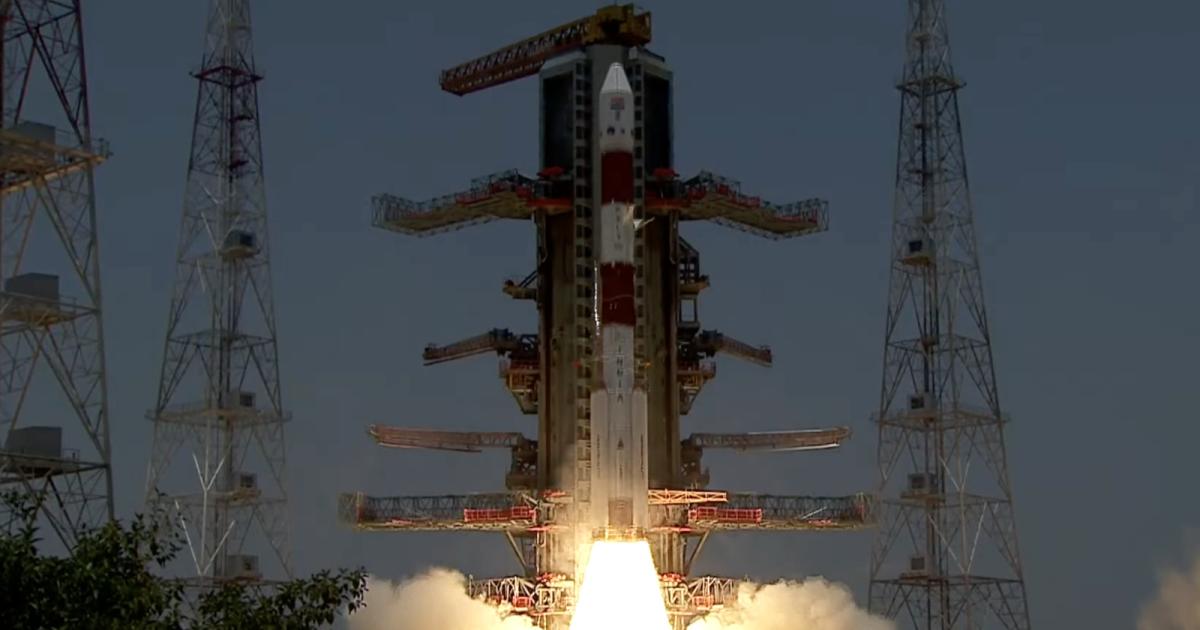
Indian Prime Minister Narendra Modi desires to recreate India’s IT growth with area, a authorities official advised Reuters. And the Indian House Analysis Organisation’s efforts do present that the nation really is severe about desirous to be often called a significant participant. Only a week after Chandrayaan-3 touched down on the moon, the nation’s area company has already launched a rocket carrying Aditya-L1, the primary Indian mission devoted to observing the solar.
Aditya-L1 will journey 930,000 miles over 4 months till it reaches the L1 Lagrange Level between the solar and our planet. A Lagrange level is a spot of equilibrium between two large orbiting our bodies the place objects have a tendency to remain put, thereby minimizing a spacecraft’s gas consumption. The spacecraft will stay in orbit to gather knowledge that scientists are hoping would assist them work out why the solar’s corona is hotter than its floor.
They’re additionally hoping that the mission may present info on how photo voltaic radiation and varied photo voltaic phenomena have an effect on communication methods and satellites, in addition to energy grids. By understanding these results, area corporations and businesses can higher shield satellites in orbit. If scientists can predict coronal mass ejections, as an illustration, they’ll alert operators in order that they’ll shut down their satellites’ energy earlier than the phenomenon happens. As well as, scientists are hoping that Aditya-L1 can make clear photo voltaic wind conduct and on how the solar’s exercise can affect the Earth’s local weather in the long term.
Sankar Subramanian, principal scientist of the mission, stated: “We’ve got made certain we can have a singular knowledge set that isn’t at present obtainable from another mission. This may permit us to know the solar, its dynamics in addition to the internal heliosphere, which is a vital factor for current-day know-how, in addition to space-weather facets.”
India already has a number of different missions lined up for the approaching years. It is working with Japan to ship an uncrewed lander and rover to discover the south pole area of the moon by 2025. Earlier than that, by subsequent 12 months, it is planning to launch orbiters to look at Mars and Venus.
Trending Merchandise


![CRATIX 360°Rotatable and Retractable Car Phone Holder, Rearview Mirror Phone Holder [Upgraded] Universal Phone Mount for Car Adjustable Rear View Mirror Car Mount for All Smartphones](https://m.media-amazon.com/images/I/410N7NZtIjL._SS300_.jpg)




![Car Phone Holder Mount, [Military-Grade Suction & Super Sturdy Base] Universal Phone Mount for Car Dashboard Windshield Air Vent Hands Free Car Phone Mount for iPhone Android All Smartphones](https://m.media-amazon.com/images/I/51KK2oa9LDL._SS300_.jpg)